

The View
When the brief is the landscape itself, the architecture must learn to disappear.
We arrived in the South Island on a still morning. The mountains were doing what mountains do here — filling every sightline, every gap between trees, every pause in conversation. Before we even reached the site, we understood: this project would not be about what we build. It would be about what we frame.
The brief was deceptively simple. A private viewing lounge. A tea house. Gallery spaces for a collection that deserved stillness. All oriented toward a landscape that changes by the hour — snowfields catching first light, mist threading through valleys, the strange golden calm before dusk.


The journey in. Mountains fill the frame before you even arrive.
We don't name our clients or identify their properties. Some projects are private by nature — not because the work is secret, but because the spaces are intimate. What matters here is the design thinking, the material decisions, and the relationship between architecture and site.
01 — Reading the Land
The first site visit is never about measurement. It's about standing still. We walked the property with the local team, tracing the contour of the ridge, noting where the eye travels naturally. There's a particular point — you step past a stand of native bush and the Southern Alps open up across the entire horizon. That moment became the datum for everything that followed.

The existing estate, settled into native bush. The mountains set the terms.
New Zealand does something to your sense of scale. The landscape is vast but not distant — it presses in. The bush is dense, ancient, almost aggressive in its green. And then it breaks open and you're looking at snow-capped peaks that feel close enough to touch. The architecture had to navigate this tension: intimacy and immensity in the same view.
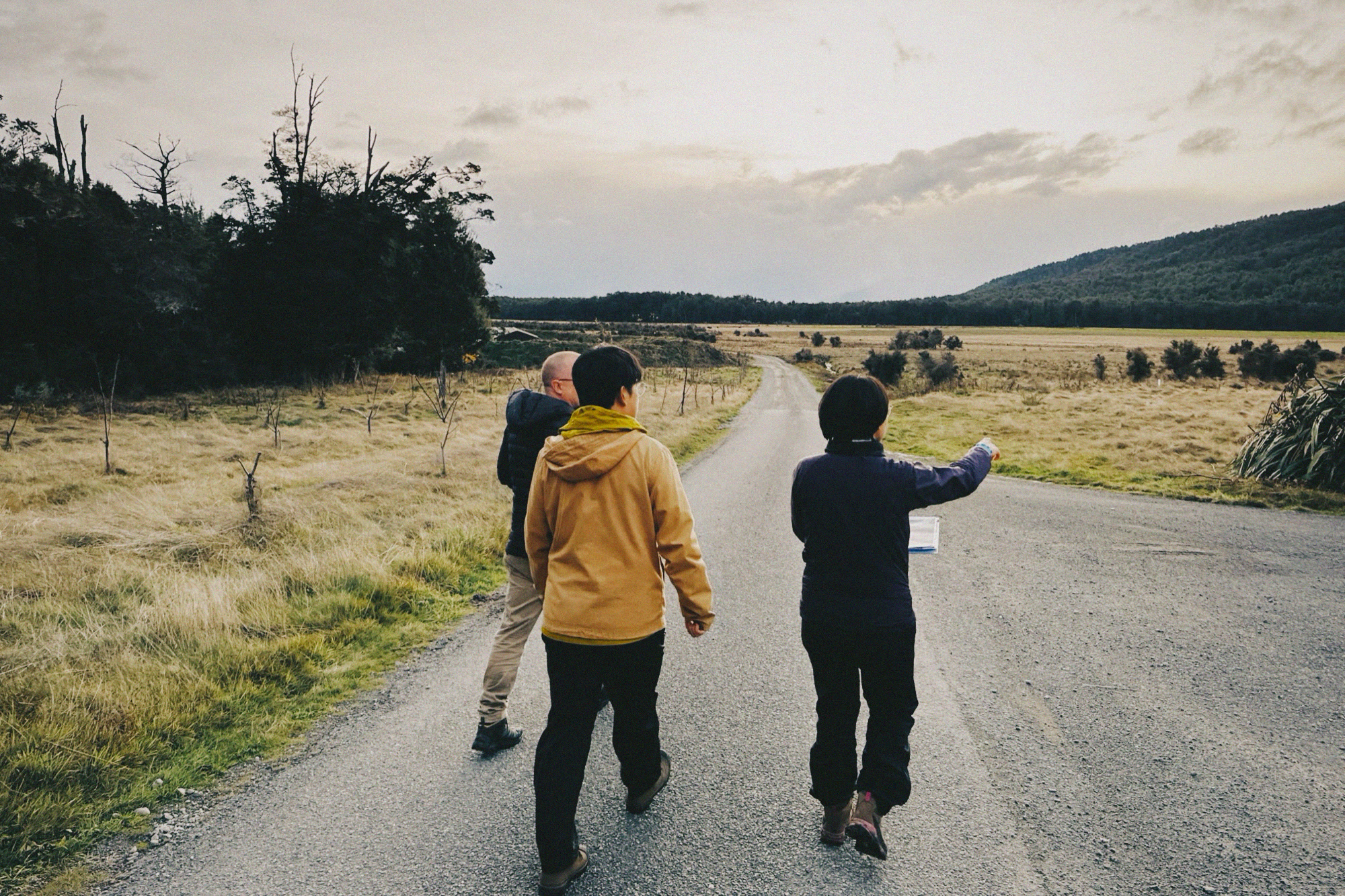

Site walk with the local team. The existing buildings on the estate already speak the language — low profiles, living roofs, timber and stone.
02 — The Corridor
The key design move emerged early. Rather than a single building oriented toward the view, we proposed a corridor — a long, glazed gallery that connects the private spaces while creating its own experience of the landscape. You walk through it, and the mountains move with you. The view shifts with every step.
One wall is timber-paneled — warm, tactile, directional. The opposite wall is stone — cool, monolithic, grounding. Between them, a glass roof draws a line of sky along the entire length. The floor is stone. The ceiling is timber. You're held between two materials, two temperatures, two ideas of shelter, while the landscape pours in from both sides.


The corridor taking shape. Timber panels, stone walls, and floor-to-ceiling glazing that dissolves the boundary between inside and out.
This isn't a hallway. It's a piece of the building that exists purely for the act of moving through space while looking outward. The gallery function is almost incidental — art will hang here, but the primary exhibit is the land.
03 — Material Language
Every material on this project was chosen for its relationship to the site. Local stone for the walls and floors — the same geological palette as the mountains visible through the glass. Timber paneling in a species and tone that echoes the native bush. Black steel framing, kept as thin as engineering allows, so the structure reads as line drawing rather than mass.


The material board in studio, alongside the landscape that informed every choice.
We spent weeks on the material board alone. Samples arrived from local quarries. Timber options were assessed not just for grain and colour but for how they age — how they'll look in ten years, twenty years, when the patina has settled and the building has become part of the hillside. This isn't cosmetic selection. It's designing for time.
The glass specification was critical. At this altitude, with these temperature swings, the glazing system has to perform — thermally, structurally, acoustically. But it also has to be invisible. The moment you notice the glass, the view is lost. We worked with the local engineers to develop a framing system that holds maximum glass with minimum interruption.
04 — Working at Distance
Mililab led the design from concept through to a complete drawing package — plans, sections, details, material specifications. The kind of documentation that leaves nothing to interpretation. From our studios in Tokyo and Penang, we developed the project across time zones, with site visits punctuating the digital workflow.

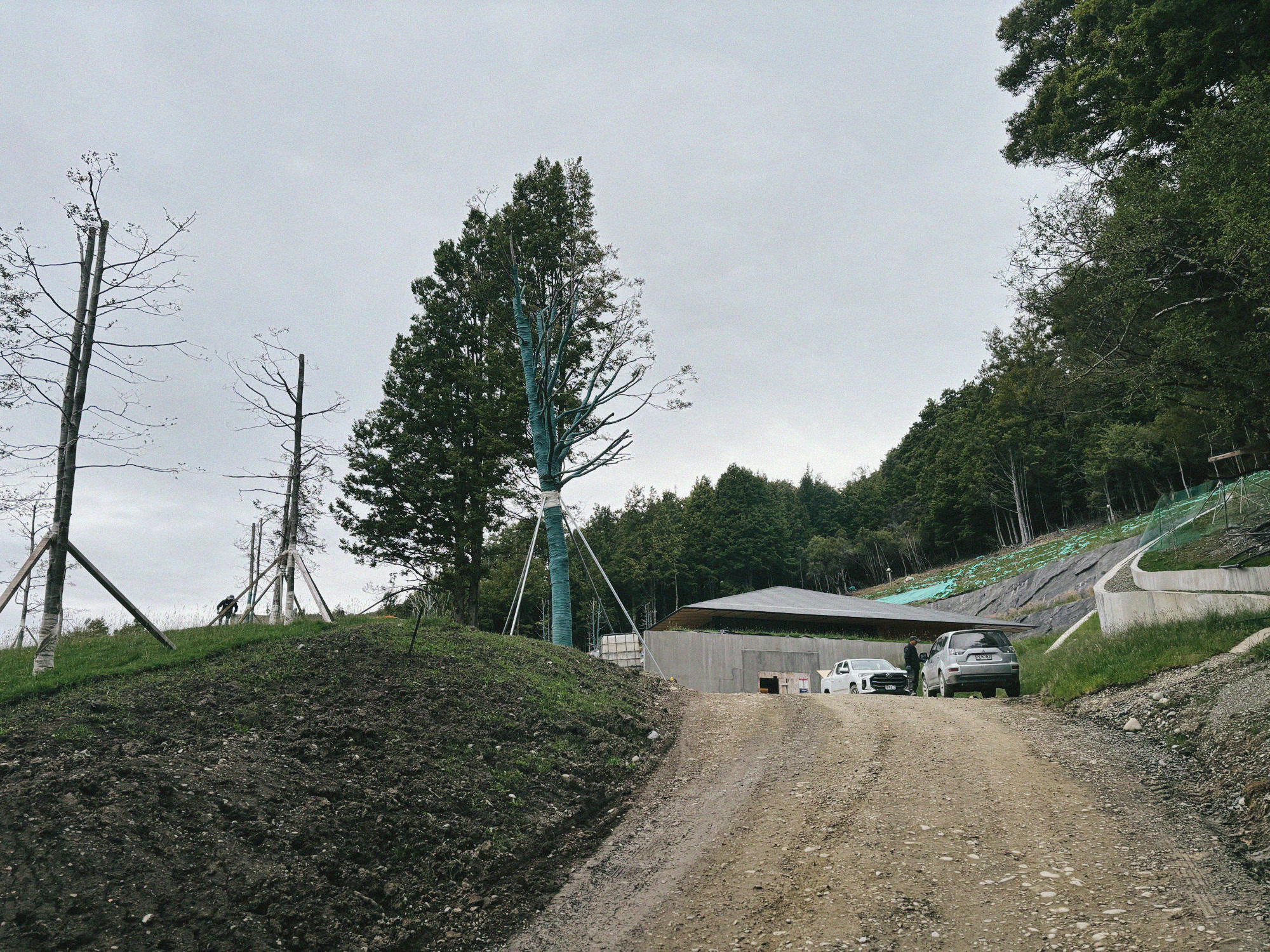
From above and on the ground. The project emerges from its hillside.
A local New Zealand team took over the drawings for building consent — adapting our design intent to local codes, seismic requirements, and the specific engineering conditions of the site. This is how we prefer to work on remote projects: lead the design, establish every detail, then hand the technical delivery to people who understand their own ground.
The process was slow. Projects like this always are. The site is remote. The ambition is high. The client understands that the right building takes the time it takes. We started in 2020, and the estate is now approaching completion — every corridor, every view frame, every stone course resolving into the building we first imagined standing on that ridge.


The South Island and its details. Landscape, light, and craft.
05 — What Remains
Architecture at its best doesn't announce itself. It adjusts the way you see. On the South Island, every window is a decision about which part of the view matters most. Every wall is a decision about what to hide. The lounge will orient visitors toward the mountains. The tea house will frame a closer, quieter scene — water, stone, native planting. The gallery corridor will make the walk between them feel like the main event.
We don't have furniture on site yet. That comes later — and when it does, the ENWA pieces will enter a space already shaped by the same principles: material honesty, sculptural restraint, and the belief that design should serve the experience of being somewhere, not the experience of looking at something designed.
For now, the building is learning to be part of the mountain. Which is all we ever asked of it.
Kuukan · Architecture
START A CONVERSATION →